Kubota L3901 Oil Coolant Hose Is Cracked and Leaking: How to Remove and Replace It Without Losing More Oil
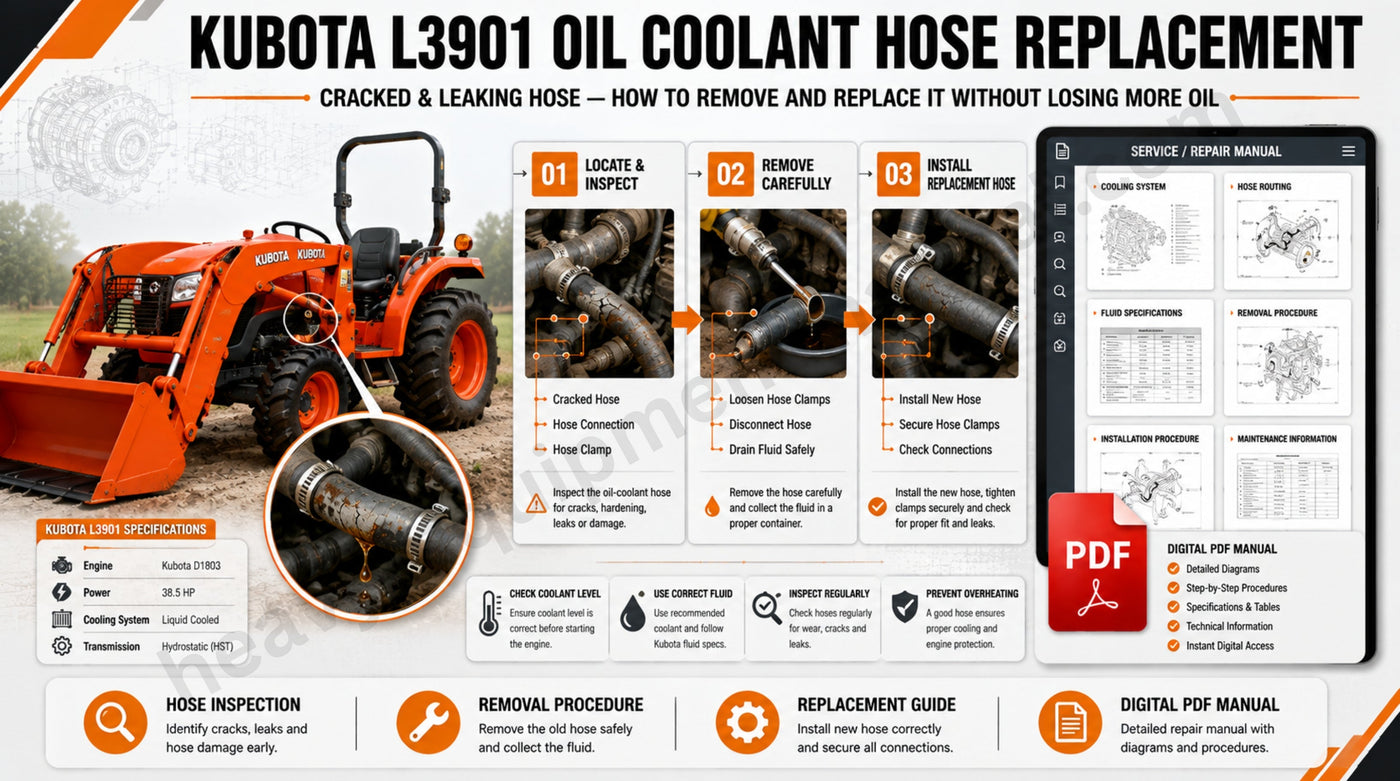
⚡ QUICK ANSWER
A cracked or leaking oil-coolant hose on a Kubota L3901 is usually hydraulic fluid, not engine oil, and is most often found near the battery tray or the rear hydraulic filter area. Before replacing it, confirm the fluid type, depressurize the hydraulic system, and check whether the actual problem is a loose hose clamp rather than a cracked hose.
Finding fluid under a Kubota L3901 is unsettling, but before reaching for a wrench, the first job is figuring out exactly what's leaking and from where. Not every "cracked hose" is actually cracked, and not every leak is engine oil.
This guide walks through how to identify the leak, depressurize the system safely, and replace the hose without losing more fluid than necessary.
Is the Leak Hydraulic Fluid or Engine Oil?
This is the first thing to confirm, and it changes everything about the repair. Hydraulic fluid on the L3901 is typically light-colored and doesn't carry the smell of engine oil. If what's pooling under the tractor doesn't smell like engine oil, it's most likely hydraulic fluid from the oil cooler line rather than a true engine oil leak.
Getting this wrong matters, because the hydraulic and engine oil systems are serviced differently, and confirming which one you're dealing with before starting saves a wasted repair attempt.
Where Is the Oil Cooler Located on a Kubota L3901?
Owners consistently report finding oil on the battery tray, with the oil cooler and its rubber connecting hoses tucked in that area right behind it. If you're seeing oil or hydraulic fluid on the battery tray itself, that's a strong sign the leak is coming from the oil cooler hoses rather than somewhere else on the machine.
The hose in question connects to the oil cooler return line, which carries cooled hydraulic fluid back to the transmission case.
Is It a Cracked Hose or Just a Loose Clamp?
Before assuming the hose itself has failed, check the hose clamps first. Several L3901 owners have traced what looked like a hydraulic leak back to a simple loose hose clamp instead, a much cheaper and faster fix than replacing the hose. If tightening the clamp stops the leak, there was never a crack to begin with.
If the leak continues after confirming the clamp is tight, the hose itself is the more likely cause.
How to Depressurize the Hydraulic System Before Replacing the Hose
Removing a hydraulic hose while the system is still under pressure is how a small leak turns into a fluid spray. Before disconnecting anything:
- Shut the engine off and allow the machine to sit
- Lower any raised implements or attachments fully
- Cycle the loader or steering controls a few times with the engine off to release residual pressure
- Have a drain pan ready under the connection point before loosening any fitting
How Often Should the Oil Cooler Line Be Inspected or Replaced?
Per Kubota's own maintenance guidance, the oil cooler line should be checked every 200 hours and replaced approximately every 2 years, since it's a flexible rubber section rather than a rigid metal line. If your L3901 is past this interval and showing any wear, replacing it proactively is cheaper than dealing with a failure mid-job.
Removing and Replacing the Hose
- Confirm the system is depressurized using the steps above
- Place a drain pan under the hose connection before loosening any clamp
- Loosen the hose clamps at both ends of the section being replaced
- Remove the old hose and inspect the fittings for damage
- Install the new hose, seating it fully onto both connection points
- Tighten the clamps to the specified torque; avoid over-tightening, which can cut into the new hose and cause the same leak again
- Refill hydraulic fluid to the correct level and check for leaks with the engine running
🔧 Ready to Replace the Hose? Here's the Manual You'll Need
Once you've confirmed the leak, checked the clamp, and depressurized the system, having the correct reference for torque values and hose routing makes the rest of the job straightforward rather than guesswork.
Kubota L3901 Tractor Service Repair Manual
The factory manual for the L3901, covering the hydraulic system this repair falls under. Suited to owners doing their own repair, as well as independent technicians without dealer-level access to Kubota's documentation.
Price: $27.96 ~~$54.95~~ (49% off) — extra 20% off at checkout with code FIX20
What's inside:
● Hydraulic system disassembly and repair procedures
● Torque specifications for hose clamps and fittings
● Engine and cooling system service information
● Full troubleshooting sections beyond this specific repair
✅ Instant digital access ✅ Searchable, printable PDF ✅ Works on any device ✅ Factory-level documentation
Looking for another Kubota model? Browse the Kubota Manual PDF collection.
Related resources: How to find the right service manual for your equipment · Download Help
Still unsure which manual matches your exact L3901, or dealing with a different issue entirely? Contact us with your model and serial number and we'll help you find the right one.
Frequently Asked Questions
Is a coolant hose leak on the L3901 always a hydraulic issue? Not always, but it's the most commonly reported cause. Confirm fluid color and smell first, since engine coolant, engine oil, and hydraulic fluid all require different repairs.
Can I keep operating the tractor with a slow leak? Continued use risks running the hydraulic system low, which can cause sluggish implement movement or pump damage. It's best to address the leak before returning to regular work.
What torque should the hose clamps be set to? This varies by clamp type and is specified in the service manual for your exact machine. Over-tightening a worm-drive clamp can cut into the hose and cause a new leak.
Is this the same issue as the L3901's overheating problems? No. Overheating on the L3901 is more often linked to a clogged radiator pre-screen restricting airflow, a separate issue from an oil cooler hose leak, even though both involve the cooling area of the tractor.
Can I download the manual instantly after buying? Yes. The PDF download link is sent by email right after payment clears, with no shipping wait.