CAT Hydraulic Troubleshooting: What to Check Before Replacing Parts
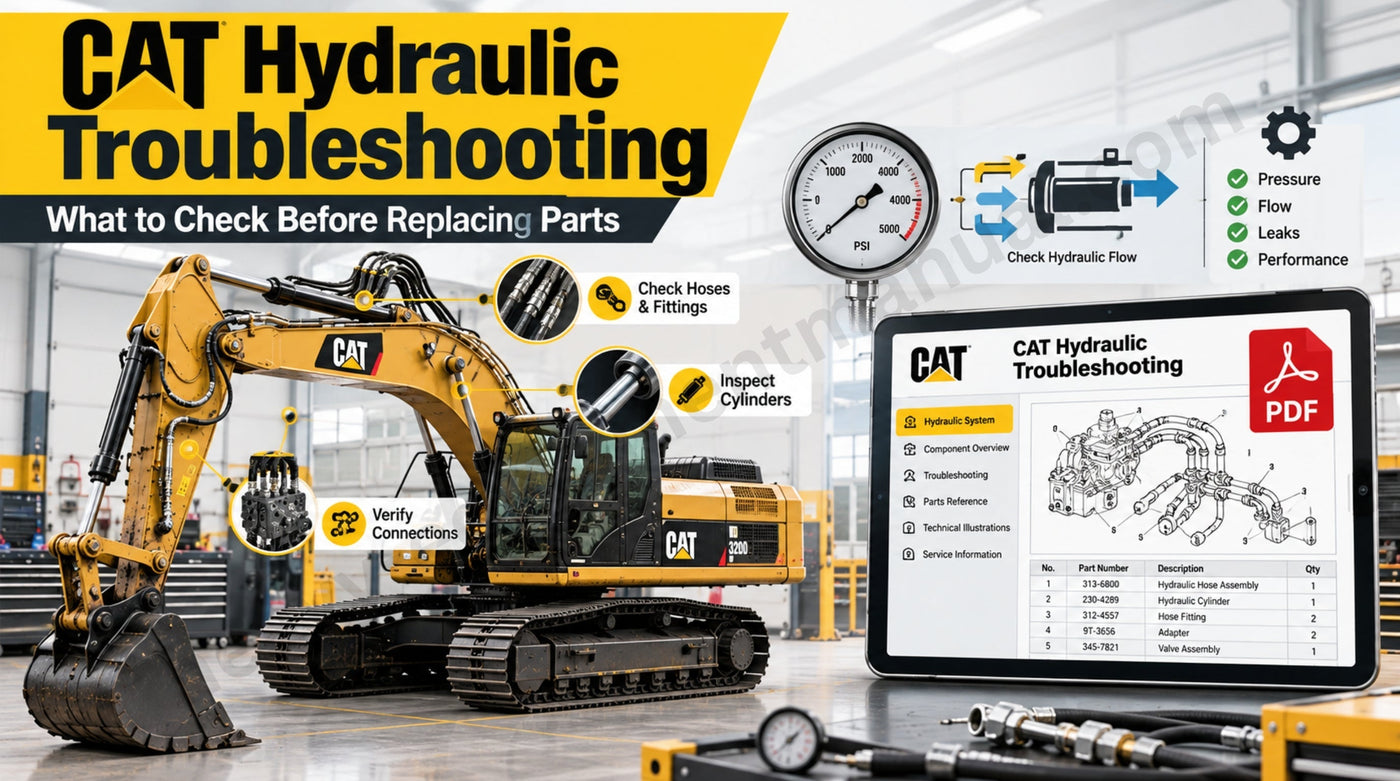
CAT hydraulic troubleshooting should start with the exact machine model, serial number or prefix, the hydraulic symptom and basic system inspection. Slow functions, weak hydraulic performance, abnormal noise, leaks and pressure problems can have different causes. Before replacing a pump, valve or cylinder, check the applicable machine specifications and follow model-specific testing and troubleshooting procedures from the correct CAT service documentation.
Need the correct CAT manual?
Match your machine model, serial information and repair requirement before choosing documentation.
Caterpillar hydraulic systems work under demanding conditions across excavators, skid steer loaders, wheel loaders, track loaders, and other heavy equipment. When hydraulic performance changes, the first instinct may be to replace the component that appears most likely to have failed.
That can be an expensive mistake.
A hydraulic problem may involve the pump, pressure regulation, oil condition, filters, hoses, control components, cylinders or another part of the system. The symptom alone does not always identify the failed component.
A better approach is to identify the machine, define the symptom, inspect the system, perform the appropriate tests and then use the correct service documentation before replacing major components.
What Are the Most Common CAT Hydraulic Problems?
CAT hydraulic problems can appear in several different ways. Common symptoms include:
- Slow boom, arm, bucket or lift movement
- Weak digging or lifting performance
- Reduced attachment performance
- Low or inconsistent hydraulic pressure
- Hydraulic oil leaks
- Unusual whining or grinding
- Excessive hydraulic temperature
- Intermittent hydraulic operation
- Cylinder drift
- Slow travel or other hydraulic functions
These symptoms can have overlapping causes.
For example, slow hydraulic movement could be related to pump performance, hydraulic pressure, flow, fluid condition, control components or a cylinder problem. That is why CAT hydraulic troubleshooting should be based on testing rather than replacing parts based only on symptoms.
How Do You Troubleshoot a Caterpillar Hydraulic System?
A practical troubleshooting process begins with simple checks and progresses toward machine-specific testing.
1. Identify the Exact CAT Machine
- Machine model
- Serial number or serial prefix
- Machine configuration
- Engine information where relevant
- Attachment being used
This is important because Caterpillar equipment can have different configurations and service requirements.
2. Describe the Hydraulic Problem
Don't simply record "Hydraulics are bad." Be more specific.
- Is one hydraulic function slow?
- Are all functions weak?
- Does the problem happen only when the machine is hot?
- Does it occur under load?
- Is an attachment affected?
- Is there unusual noise?
- Is hydraulic oil leaking?
- Is the problem constant or intermittent?
3. Perform a Visual Inspection
Look for hydraulic oil level, visible leaks, damaged hoses, loose clamps, damaged fittings, oil cooler or line leaks, pump-area damage, dirt around cylinder seals, damaged cylinder rods and damaged linkage or joints.
4. Listen to the Hydraulic System
Whining or grinding noises may indicate conditions requiring further investigation, including possible pump cavitation or bearing problems. Noise should be treated as a symptom, not a final diagnosis.
5. Perform the Correct Hydraulic Tests
Depending on the machine, testing can include cylinder drift, cylinder cycle time, hydraulic pressure, pump main-relief, pilot pressure, diagnostic code, and other model-specific tests.
Caterpillar's current technical analysis guidance describes cylinder drift, cycle-time and pump main-relief testing and advises users to use the service instructions and acceptable ranges for their specific equipment.
What Causes Low Hydraulic Pressure on a CAT Machine?
Possible areas to investigate include hydraulic pump performance, relief-valve operation, hydraulic oil condition, filters, control valves, hydraulic cylinders, internal leakage, hoses and connections, and other hydraulic components.
The correct diagnostic procedure depends on the Caterpillar machine and hydraulic system. Do not assume that a low-pressure reading automatically means the pump needs replacing.
How Do You Check CAT Hydraulic Pressure?
Hydraulic pressure should be checked using the procedure and specifications applicable to the exact CAT machine.
Caterpillar's current hydraulic testing guidance includes a pump main-relief test to determine how much pressure the pumps are delivering. Caterpillar notes that pressure that is too high can damage components, while pressure that is too low can reduce performance.
Do not use a pressure specification from another CAT model as a substitute for your machine's specification. Before testing, follow the machine's safety procedures and use the applicable service information.
What Causes Slow CAT Hydraulic Functions?
| Hydraulic symptom | Areas to investigate |
|---|---|
| Slow boom or lift movement | Pressure, flow, cylinders and control components |
| Weak digging performance | Pump, pressure, flow and related hydraulic components |
| Slow attachment operation | Auxiliary hydraulic circuit, pressure and flow |
| Slow travel | Travel system, hydraulic pressure and controls |
| Intermittent hydraulic function | Controls, connections and hydraulic components |
| Hydraulic overheating | Fluid condition, system load and related cooling factors |
This table is a troubleshooting starting point, not a diagnosis. A service manual matching the exact machine can help determine which tests should be performed next.
How Do You Know if a CAT Hydraulic Pump Is Failing?
Possible warning signs include reduced hydraulic performance, low or abnormal pressure, unusual pump noise, slow hydraulic functions, excessive heat and performance changes under load.
However, several other hydraulic problems can produce similar symptoms. This is why testing before replacing a pump can help prevent unnecessary component costs.
What Causes CAT Hydraulic Cylinder Problems?
Signs that may require investigation include visible oil leakage, dirt around cylinder seals, damaged cylinder rods, excessive cylinder drift, increased cycle time, reduced cylinder speed and abnormal movement.
If a cylinder requires removal or rebuilding, use the service information applicable to the exact machine rather than relying on a generic hydraulic procedure.
How Does Hydraulic Contamination Affect a CAT Machine?
Hydraulic systems contain components with close tolerances, meaning contamination can affect pumps, motors, valves and cylinders.
Caterpillar identifies contamination as a threat to hydraulic-system performance and recommends proactive maintenance, appropriate filters and fluids, and fluid analysis as part of contamination control.
- Reduced hydraulic performance
- Component wear
- Abnormal noise
- Increased operating temperature
- Repeated hydraulic-component problems
What Do CAT Hydraulic Diagnostic Codes Tell You?
Electronic Caterpillar machines may provide diagnostic and event codes that can help identify system problems. Caterpillar's current hydraulic testing guidance describes accessing active and logged diagnostic/event codes through the machine's diagnostic interface.
However, a fault code should not automatically be interpreted as "Replace this component." The code is part of the diagnostic process.
CAT Hydraulic Troubleshooting Safety Checklist
- Park the machine on a suitable level surface.
- Lower implements as appropriate.
- Follow the machine's lockout and safety procedures.
- Shut down the engine when required.
- Release hydraulic pressure according to the applicable instructions.
- Allow hot components to cool.
- Wear appropriate PPE.
- Never use your hands to search for a high-pressure hydraulic leak.
Why CAT Model and Serial Information Matters
A search for CAT hydraulic troubleshooting can apply to many different machines. A 289D3 skid steer loader, excavator, wheel loader and other Caterpillar equipment can have different hydraulic systems, components and technical specifications.
Caterpillar's equipment resources use serial-number information to help users access the appropriate manuals and service information.
Which CAT Manual Do You Need for Hydraulic Problems?
| What you need to do | Appropriate documentation |
|---|---|
| Diagnose hydraulic problems | Service/troubleshooting manual |
| Check hydraulic testing procedures | Service manual |
| Review hydraulic schematics | Service/schematic information |
| Identify hydraulic parts | Parts manual |
| Find exploded component diagrams | Parts manual |
| Perform routine maintenance | Operation & Maintenance Manual |
| Remove or repair components | Service/repair manual |
Parts manual: Helps answer “What part is this?”
Service manual: Helps answer “How do I test, diagnose, remove, adjust or repair it?”
Working on a CAT 289D3?
If your hydraulic problem requires deeper testing, troubleshooting or repair information, verify that the manual matches your machine before purchasing.
Heavy Equipment Manual currently lists a Caterpillar 289D3 Skid Steer Loader Service Repair Manual JX9. The listing identifies coverage for the 289D3 and includes system operation, schematics, testing and adjusting, troubleshooting, disassembly and assembly, and specifications. It is supplied as a searchable digital PDF.
View CAT 289D3 Service Repair Manual →CAT 289D3 Hydraulic Troubleshooting Example
The CAT 289D3 is a useful example of why model-specific documentation matters.
If a 289D3 develops weak or slow hydraulic performance, identify the exact machine and symptom before deciding that a hydraulic pump, motor, cylinder or valve needs replacement.
- General service information
- System operation
- Specifications
- Schematics
- Testing and adjusting
- Troubleshooting
- Disassembly and assembly
- Torque specifications
CAT 289D3 Service Repair Manual
Check the model and applicable machine details before purchasing. Use the manual when you need model-specific service, testing, troubleshooting or repair information.
Check the CAT 289D3 Manual →Find the Correct Caterpillar Service Manual
If your CAT machine is not a 289D3, don't select a manual simply because the product title contains the Caterpillar model family.
Start with your model + serial number/prefix + machine configuration + repair requirement.
Caterpillar Manual PDF Collection
Browse model-specific Caterpillar documentation across equipment categories including excavators, skid steer loaders, wheel loaders, track-type tractors, engines, compactors and other machines.
Browse the Caterpillar Manual PDF Collection →CAT Hydraulic Troubleshooting: Quick Decision Guide
Related CAT Resources
How to Read a Caterpillar Serial Number and Check Fault Codes
Useful when identifying the machine before selecting documentation.
Why CAT Engine Manuals Look So Similar and How to Pick the Right One
Useful when different Caterpillar engine arrangements require different technical documentation.
Frequently Asked Questions
What causes weak hydraulics on a CAT machine?
Weak hydraulic performance can involve pressure, flow, pump performance, valves, cylinders, fluid condition or other system components. Testing is needed to determine the actual cause.
How do I check hydraulic pressure on a Caterpillar machine?
Use the pressure-testing procedure and specifications for the exact CAT model and configuration. Use applicable service instructions and acceptable measurement ranges for the equipment.
What causes slow hydraulic functions on a CAT?
Possible areas include hydraulic pressure, pump performance, flow, control components, cylinders, fluid condition and other hydraulic-system components. The symptom alone does not confirm the failed part.
How do I know if a CAT hydraulic pump is failing?
Reduced performance, abnormal noise or pressure problems can indicate a pump issue, but these symptoms can have other causes. Model-specific pressure and performance testing can help narrow down the problem.
Can a CAT service manual help with hydraulic troubleshooting?
Yes. Caterpillar service information can include troubleshooting, testing and adjusting procedures, system operation information and schematics, depending on the applicable publication.
Is a CAT parts manual the same as a service manual?
No. A parts manual is primarily used for component identification, diagrams and part references. A service manual provides information for diagnosis, testing, adjustment, disassembly, assembly and repair.
Need the Correct CAT Manual?
A hydraulic problem does not automatically mean that the pump, motor, cylinder or valve needs replacing.
Start by identifying the exact Caterpillar model and serial information, document the hydraulic symptoms and perform the appropriate basic inspections. For deeper diagnosis, use technical documentation that matches the machine and its configuration.
Find Your CAT Manual
Check model, serial information, manual type and coverage before purchasing.
Technical specifications, procedures and acceptable test values can vary by Caterpillar model, configuration and serial-number range. Always follow the applicable machine documentation and safety procedures.
-
Posted in
CAT hydraulic pressure, CAT hydraulic problems, CAT hydraulic pump troubleshooting, CAT hydraulic system schematic, CAT hydraulic system troubleshooting, CAT repair manual, CAT service manual PDF, Caterpillar hydraulic problems, Caterpillar hydraulic schematic, Caterpillar hydraulic troubleshooting, Caterpillar repair manual PDF, Heavy Equipment Manuals PDF