CAT 262D Engine Troubleshooting Guide for Technicians
Introduction
Engine performance problems in the CAT 262D skid steer loader can quickly affect machine productivity and operational reliability. Operators working in construction, landscaping, agriculture, and material-handling environments across the United States may encounter symptoms such as hard starting, reduced engine power, excessive exhaust smoke, overheating, or unstable idle performance.
Accurate engine diagnostics require a structured troubleshooting process combined with correct reference documentation. Understanding the engine system, performing systematic inspections, and verifying specifications are essential steps when diagnosing faults in modern diesel equipment.
This guide explains how the CAT 262D engine system operates, outlines practical troubleshooting procedures technicians can follow in field conditions, and highlights when it becomes necessary to consult official service documentation for accurate repair specifications.
Engine System Overview
The CAT 262D skid steer loader is powered by the C3.3B diesel engine, a reliable and compact power unit designed to deliver consistent performance in demanding work environments. The engine converts fuel energy into mechanical power, which drives the machine’s hydraulic pumps and other operational systems.
Proper engine performance depends on several integrated subsystems working together, including the fuel system, air intake system, cooling system, lubrication system, and electronic monitoring components.
Key Engine Components
The engine system includes several critical components that support machine performance:
• Fuel injection system
• Air intake system and turbocharger
• Engine control module (ECM)
• Cooling system components
• Engine lubrication system
• Exhaust system components
• Sensors and electrical wiring harness
Each component must function within the correct pressure, temperature, and airflow parameters to maintain reliable engine operation.
Common Failure-Prone Components
Engine-related issues often originate from the following areas:
• Fuel injector wear or clogging
• Restricted fuel filters
• Air intake blockages
• Turbocharger efficiency loss
• Cooling system malfunctions
• Faulty sensors or wiring connections
Technicians working across multiple skid steer loader models often identify similar failure patterns related to fuel delivery, airflow restriction, or overheating.
Step-by-Step Engine Troubleshooting Procedure
Following a structured troubleshooting approach helps technicians accurately diagnose engine issues without unnecessary part replacement.
1. Initial Inspection
Start with a visual inspection of the engine compartment.
Check for:
• Fuel leaks around injectors or fuel lines
• Loose wiring connections
• Oil leaks near seals or gaskets
• Damaged air intake hoses
• Abnormal vibration or noise during engine operation
Many performance issues can be detected during this initial inspection stage.
2. Fuel System Diagnostics
Fuel delivery problems are among the most common causes of engine performance issues.
Inspect the following components:
• Fuel filter condition
• Fuel pump operation
• Injector spray pattern
• Fuel pressure levels
Clogged filters or injector faults can lead to poor acceleration, rough engine idle, and reduced engine power.
3. Air Intake and Turbocharger Inspection
Diesel engines rely on proper airflow for efficient combustion.
Technicians should inspect:
• Air filter condition
• Intake hoses and clamps
• Turbocharger operation
• Intake system leaks
Restricted airflow often results in black exhaust smoke, reduced power output, and increased fuel consumption.
4. Cooling System Inspection
Overheating can cause serious engine damage if not addressed promptly.
Check the following components:
• Radiator condition
• Coolant levels
• Water pump operation
• Cooling fan functionality
• Thermostat performance
Overheating symptoms may include warning indicators, coolant loss, and reduced engine efficiency.
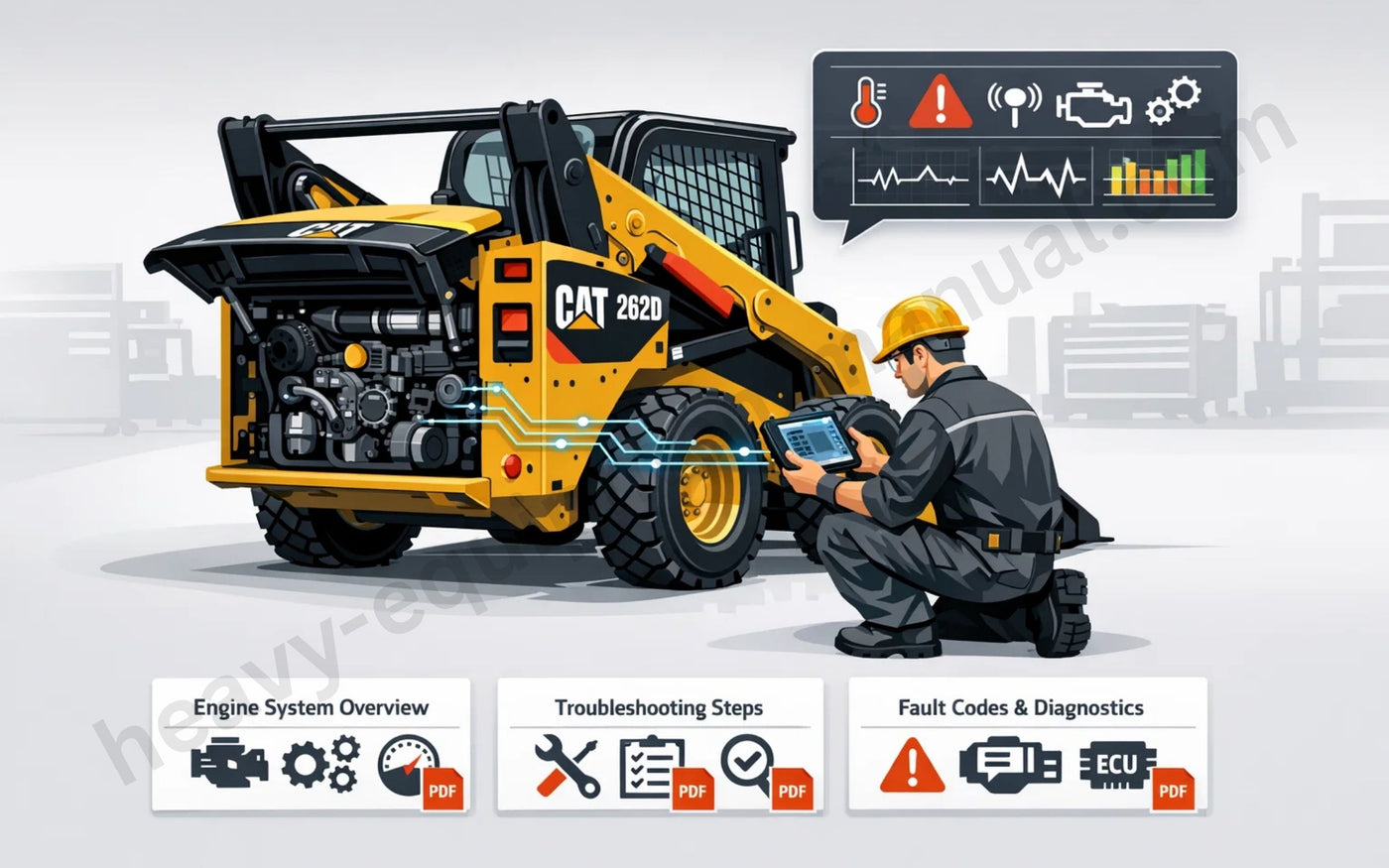
5. Electronic Diagnostics
The CAT 262D includes electronic monitoring systems that assist with engine diagnostics.
Technicians should:
• Scan for diagnostic fault codes
• Inspect ECM connectors
• Check sensor calibration
• Verify wiring harness integrity
Electronic faults can sometimes mimic mechanical engine failures.
6. When to Refer to the Official Manual
During advanced diagnostics, technicians may require precise technical data such as torque specifications, component calibration procedures, hydraulic schematics, or system testing instructions.
At this stage, technicians commonly refer to the official CAT 262D Skid Steer Loader Service Repair Manual for detailed diagnostic procedures, system schematics, and repair specifications required during engine troubleshooting.
Safety & Compliance Notes
Servicing diesel engines involves mechanical components, pressurized fuel systems, and high operating temperatures. Proper safety procedures must always be followed.
OSHA Safety Considerations
When performing engine diagnostics:
• Shut down and secure the machine before servicing
• Follow lockout/tagout procedures
• Avoid contact with moving engine components
• Relieve fuel pressure before disconnecting lines
Following OSHA safety standards reduces the risk of injury during maintenance.
Safe Engine Service Practices
Technicians should always:
• Wear protective gloves and eye protection
• Allow the engine to cool before servicing
• Use calibrated torque tools
• Replace damaged hoses and fittings immediately
Proper safety practices protect both technicians and equipment.
Common Mistakes to Avoid
Even experienced technicians may encounter avoidable diagnostic errors.
Using Incorrect Model Documentation
Different skid steer models may use similar components but require different specifications and procedures.
Skipping Diagnostic Steps
Replacing components without verifying fuel pressure or airflow may lead to unnecessary repairs.
Ignoring Sensor Fault Codes
Electronic fault codes provide valuable insight into system performance and should always be reviewed.
Performing Repairs Without Reference Documentation
Incorrect torque values or improper assembly procedures can result in repeated mechanical failures.
Why Accurate Engine Documentation Matters
Engine systems operate with precise mechanical tolerances and calibration settings. Small variations in pressure, torque, or assembly procedures can lead to:
• Reduced engine performance
• Increased fuel consumption
• Premature component wear
• Unexpected machine downtime
Using correct service documentation helps technicians perform accurate repairs while maintaining safe and reliable machine operation.
Conclusion
Engine troubleshooting in the CAT 262D skid steer loader requires a systematic diagnostic approach that includes inspection, fuel system checks, airflow diagnostics, cooling system evaluation, and electronic fault code analysis.
Following a structured troubleshooting process allows technicians to accurately identify performance issues while minimizing unnecessary component replacement.
When performing advanced diagnostics or mechanical repairs, always refer to the appropriate equipment documentation to ensure accurate service procedures and safe machine operation.
CAT 262D Engine Troubleshooting – Common Technician Questions
What engine is used in the CAT 262D skid steer loader?
The Caterpillar C3.3B diesel engine powers the CAT 262D skid steer loader. This engine is designed to provide reliable power for compact construction equipment while maintaining fuel efficiency and durability under demanding operating conditions.
What are common engine problems in the CAT 262D skid steer loader?
Technicians working with CAT 262D loaders may encounter several engine-related issues during operation. Common problems include:
• Hard engine starting
• Loss of engine power
• Excessive exhaust smoke
• Engine overheating
• Fuel system blockages
• Sensor or electrical faults
Proper diagnostics and inspection procedures help identify the root cause of these issues before replacing components.
Why does the CAT 262D engine lose power during operation?
Loss of engine power can occur due to multiple factors such as clogged fuel filters, restricted air intake, turbocharger inefficiency, or fuel injector problems. Performing fuel pressure tests and inspecting airflow components can help determine the cause of reduced engine performance.
How do technicians diagnose overheating issues in the CAT 262D engine?
Engine overheating is typically diagnosed by inspecting the cooling system. Technicians check coolant levels, radiator condition, thermostat operation, water pump functionality, and cooling fan performance. Blocked radiators or coolant leaks are common causes of overheating in skid steer loaders.
When should technicians refer to the CAT 262D service repair manual?
Technicians should consult the service repair manual when performing advanced diagnostics or mechanical repairs that require accurate torque specifications, system schematics, testing procedures, or component calibration instructions. Using correct service documentation helps ensure repairs follow manufacturer specifications.
How often should CAT 262D engine maintenance be performed?
Routine maintenance should follow the schedule outlined in the equipment’s operation and maintenance documentation. Regular tasks typically include checking engine oil levels, replacing filters, inspecting coolant levels, and monitoring fuel system components to maintain reliable engine performance.