How to Troubleshoot Hydraulic and Engine Issues Using a Service Manual
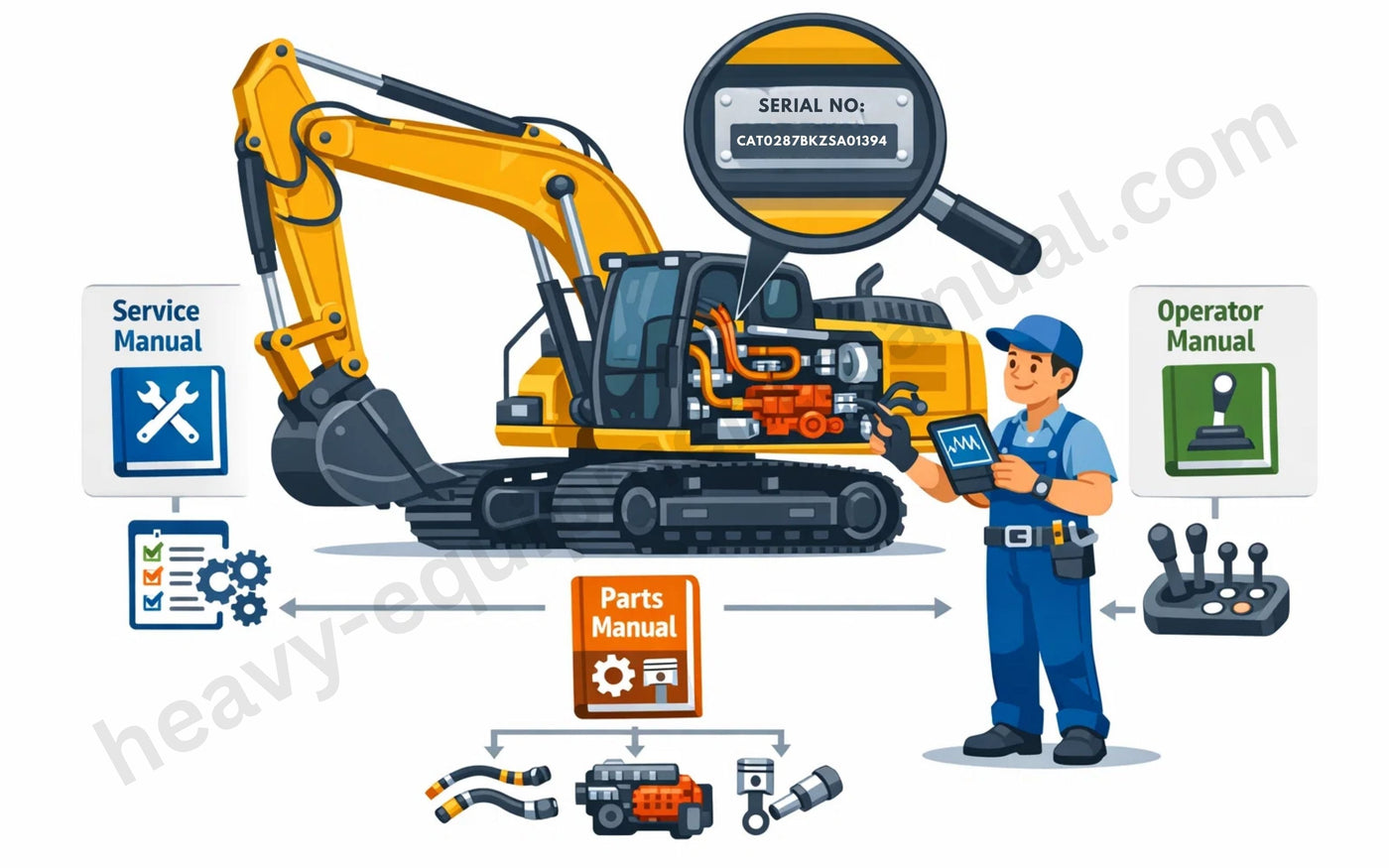
Modern heavy equipment is powerful, efficient, and highly complex. When a hydraulic function slows down or an engine throws an error code, guessing the cause can quickly lead to wasted time, unnecessary part replacements, and costly downtime.
The most reliable way to diagnose and fix hydraulic and engine issues isn’t trial-and-error — it’s using the correct service manual the way professionals do.
Whether you’re working on Caterpillar, Case, Komatsu, Bobcat, or other heavy machinery, a properly structured service manual gives you step-by-step clarity for diagnosing problems safely and accurately. At Heavy Equipment Manual, operators and technicians rely on downloadable manuals to troubleshoot real-world issues without relying solely on dealer support.
This guide explains how to use a service manual effectively to troubleshoot hydraulic and engine problems — the same process used by experienced field technicians.
Why Service Manuals Matter in Troubleshooting
Hydraulic and engine systems don’t fail randomly. Most issues fall into predictable categories such as pressure loss, flow restriction, sensor faults, electrical interruptions, or mechanical wear.
A service manual organizes these problems logically and provides:
-
Diagnostic flowcharts instead of guesswork
-
Correct test locations and expected values
-
Safe adjustment procedures
-
Component-specific repair instructions
Without a manual, troubleshooting often becomes a parts-changing exercise — replacing components until something works. Manuals eliminate that approach by guiding you to the root cause.
Understanding the Two Core Problem Types
Before opening a manual, professionals first identify what type of problem they are dealing with.
Pressure-Related Issues
These occur when the system cannot reach the pressure required to operate properly.
Common symptoms include:
-
Cylinders unable to lift loads
-
Presses failing to complete cycles
-
Machines stalling under load
Manuals help verify:
-
Relief valve settings
-
Pump compensator adjustments
-
Internal leakage paths
Flow (Volume)-Related Issues
Flow problems affect speed, not force.
Typical signs:
-
Slow cylinder movement
-
Motors are hesitating or stopping intermittently
-
Overheating due to oil bypassing
Manual schematics help trace:
-
Bypass valves
-
Solenoid-controlled flow paths
-
Electrical signals controlling pump output
Identifying whether the issue is pressure or flow-related saves hours before a single wrench is turned.
Step-by-Step: Troubleshooting Hydraulic Problems Using a Manual
Step 1: Identify the Affected Circuit
Service manuals include hydraulic schematics that show how oil flows through the system. Start by locating:
-
The pump supplying the circuit
-
Control valves
-
Cylinders or motors involved
This prevents working on unrelated components.
Step 2: Verify Fluid Condition and Level
Manuals specify:
-
Approved hydraulic fluid types
-
Viscosity ranges
-
Change intervals
Low or contaminated fluid is one of the most common causes of poor performance. Manuals also indicate filter locations and clog indicators.
Step 3: Check Pressure at Manual-Specified Test Ports
Rather than guessing, manuals tell you:
-
Where to connect the gauge
-
Expected PSI values under load
-
Acceptable pressure variation ranges
Comparing actual readings to manual values immediately narrows the problem.
Step 4: Inspect Valves, Hoses, and Seals Using Diagrams
Exploded diagrams help trace:
-
Leak points
-
Hose routing
-
Valve orientation
Manuals also include torque values, preventing overtightening that can damage components.
Step 5: Follow the Troubleshooting Chart
Most manuals include “Probable Cause & Remedy” tables, linking symptoms directly to causes such as:
-
Stuck valves
-
Electrical signal loss
-
Internal seal failure
This structured approach prevents unnecessary part replacement.
Step-by-Step: Troubleshooting Engine Problems Using a Manual
Step 1: Locate the Engine Section
Service manuals are organized by engine family, not just machine model. This ensures:
-
Correct torque specs
-
Proper timing procedures
-
Accurate sensor values
Step 2: Start with the Symptom Index
Manuals list common issues such as:
-
The engine won’t start
-
Loss of power
-
Excessive smoke
-
Overheating
Each symptom links to specific diagnostic checks.
Step 3: Use Wiring and Fuel System Schematics
Electrical issues are common causes of engine faults. Manuals provide:
-
Connector pin layouts
-
Voltage ranges
-
Ground locations
This prevents unnecessary ECM or sensor replacement.
Step 4: Perform Manual-Guided Tests
Service manuals outline:
-
Compression testing procedures
-
Fuel pressure ranges
-
Sensor resistance checks
Following these steps confirms whether a component is actually faulty.
Step 5: Adjust or Replace Components to Manual Specifications
Manuals provide exact:
-
Torque values
-
Clearance measurements
-
Timing procedures
This ensures repairs restore proper performance without causing secondary failures.
Common Problems Manuals Help Solve
|
Problem |
Likely Cause |
Manual Section |
|
Low hydraulic pressure |
Internal leakage or relief valve |
Hydraulic troubleshooting |
|
Slow cylinder movement |
Air in the system or a flow restriction |
Hydraulic maintenance |
|
Engine overheating |
Cooling restriction or thermostat |
Cooling system |
|
Error codes |
Sensor or wiring fault |
Diagnostic section |
|
Poor engine performance |
Fuel delivery issue |
Fuel system |
Why Manuals Prevent Costly Mistakes
Without a manual:
-
Parts are replaced unnecessarily
-
Downtime increases
-
Safety risks rise
With a manual:
-
Root causes are identified
-
Repairs are repeatable
-
Equipment lifespan increases
This is why professionals treat manuals as essential tools, not optional references.
Where to Find the Right Service Manuals
Heavy Equipment Manual provides downloadable service manuals covering:
-
Hydraulic schematics
-
Engine diagnostics
-
Electrical systems
-
Parts identification
-
Maintenance schedules
Manuals are searchable, printable PDFs designed for workshop and field use — making troubleshooting faster and more accurate.
1. Can manuals help with intermittent problems?
Yes. Manuals help identify electrical or hydraulic conditions that only occur under specific loads or temperatures.
2. Do manuals cover both hydraulics and engines?
Most service manuals include full coverage for hydraulic, engine, and electrical systems.
3. Are these manuals suitable for non-technicians?
Yes. Manuals use diagrams, charts, and step-by-step procedures suitable for experienced operators and DIY users.
4. Can manuals reduce downtime?
Absolutely. Accurate diagnostics prevent repeated failures and unnecessary delays.
5. Are manuals usable on mobile devices?
Yes. PDF manuals can be accessed on laptops, tablets, and phones.
6. Do manuals include torque values?
Yes. Proper torque specifications are included for all critical components.
7. Can manuals help with older machines?
Yes. Manuals often provide better clarity on older equipment lacking onboard diagnostics.
8. Is a manual better than online forums?
Forums provide opinions. Manuals provide verified procedures.
Final Thoughts
Troubleshooting hydraulic and engine issues doesn’t have to involve guesswork or unnecessary part replacement. When used correctly, a service manual becomes your most powerful diagnostic tool — guiding you through pressure checks, flow analysis, electrical testing, and mechanical repair with confidence.
Professionals don’t troubleshoot blindly. They troubleshoot with manuals.
Explore the complete manual collection at Heavy Equipment Manual and take control of your equipment maintenance with clarity, safety, and precision.